Care · 3 min read
When Should You Replace a Watch Strap?
Learn the signs that a watch strap needs replacing, from cracking and smell to loose holes, worn stitching and damaged spring bars.
Leather watch straps reward a little care. You do not need a complicated routine, but you do need to avoid the habits that damage leather quickly.
This guide is written for people who want a practical answer before they buy, not a vague style lecture. Use it to narrow down the right size, colour, material and finish before choosing a DVIL strap.
Quick answer
Leather straps last longer when they are kept dry, wiped gently after wear and rotated so they can air out. Avoid soaking, harsh cleaners and heat.
Treat leather as a natural material
Leather changes with wear. It softens, darkens slightly, picks up marks and gradually takes the shape of the wrist. That is part of the appeal, but it also means the strap needs more care than metal, rubber or synthetic materials.
The safest habit is simple: wipe the strap after wear, keep it away from heavy moisture and let it rest between wears. A strap rotation helps because it gives each strap time to dry and recover instead of being worn hard every day.
What not to do
Do not soak a leather strap in water, scrub it aggressively or dry it with direct heat. These quick fixes can make the leather stiff, stained or cracked. If a strap is badly worn, cracked around the holes or starting to smell even after careful cleaning, replacement is usually the better choice.
Simple decision table
- Situation: best action and what to avoid
- Daily wear: wipe gently with a dry cloth. Avoid leaving sweat to dry into the leather.
- Light moisture: blot and air dry naturally. Avoid radiators, hairdryers or direct heat.
- Storage: store flat or gently curved. Avoid crushing the holes or bending the strap sharply.
- Stubborn dirt: use the mildest safe cleaning method. Avoid soaking, bleach or harsh household cleaners.
Common mistakes to avoid
- Choosing colour before size. A good-looking strap still needs the correct lug width, length and buckle fit.
- Ignoring the watch case. A slim dress watch and a chunky diver usually need different strap thicknesses and textures.
- Over-matching everything. The strap should feel connected to the watch and outfit, but it does not need to copy every colour exactly.
DVIL pairing advice
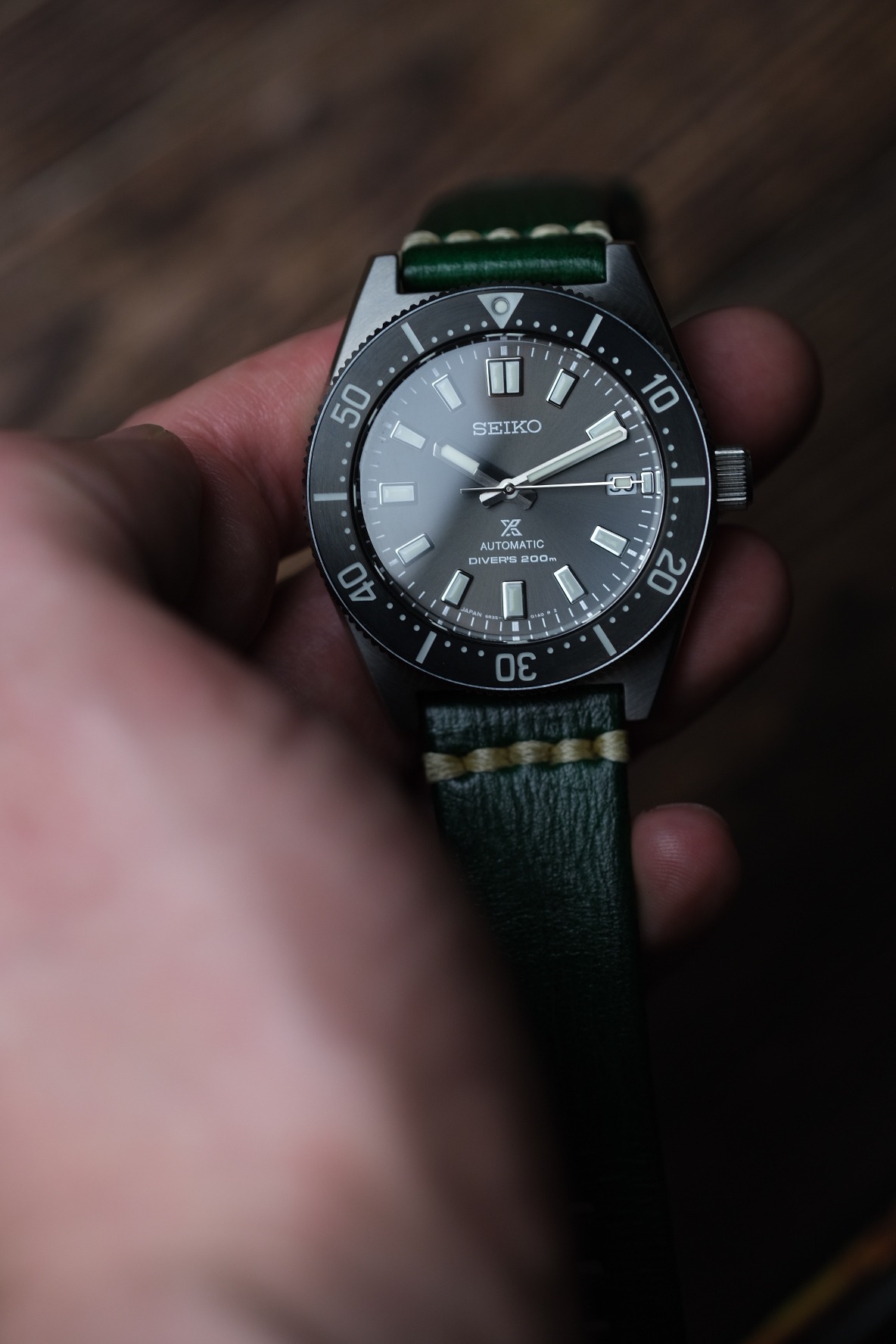
For this topic, the supporting visual should show a wrist shot of a diver on a green strap. That image helps the reader see how green textured strap in green can change the character of dive watches.
Use the image as a visual example inside the guide rather than making the article about the photograph. The search intent is the advice. The image simply proves the point and gives the page stronger product context.
Recommended internal links
- Watch straps: `/collections/watch-straps`
- Leather watch straps: `/collections/leather-watch-straps`
- Related product/category links: `/collections/watch-straps, /collections/leather-watch-straps`
FAQ
Can I wash a leather watch strap?
You should avoid soaking leather. Wipe it gently, use minimal moisture only when suitable and let it dry naturally away from heat.
How often should I clean a leather watch strap?
For everyday wear, a quick wipe after use and a light monthly check is usually enough. Clean sooner if the strap has been exposed to sweat or dirt.
When should I replace a leather watch strap?
Replace it if the leather is cracked, the holes are stretched, the stitching is failing, the spring bar area is damaged or odour does not improve after careful cleaning.
Final thought
The best strap is the one that makes the watch feel easier to wear. Get the fit right first, then choose the colour, leather and finish that matches your watch and your daily style.
Explore the DVIL watch strap collection and choose a strap that makes your watch easier to wear more often.